Showing posts with label England. Show all posts

Tuesday, November 27, 2012

Sir Beef

Wikipedia says this is a sirloin. I'll have to take their word for it.

I heard this one the other day and I had to rush home and look it up, because I'd never heard it before. To be fair, that may be because I don't really know a lot about meat or preparing it (not something I do much, being unable to digest it).

What is this myth? That the cut of beef called sirloin got its name because an English king once knighted a piece of meat and called it "Sir loin."

Sadly, as cute as the story is, it's not at all true. 

It's French. "Sir Loin" is actually "sur longe" ... Longe was French for loin, and sur simply means "above." So it is literally the cut "above the loin." *

Where is that? Well, that depends on where you live.

If you're American, it's this lime green spot:


If you're British, it's practically a quarter of the cow:


If you're Dutch, it's this long peach colored area:


And if you're Brazilian, it's a slim area between the tenderloin and it's skirt (and your cows have this funny hump too):

Tuesday, November 6, 2012

Bonfire Bright


This one I suspect many (if not most) USians became familiar with the name Fawkes from the character in Harry Potter. I recall one English friend of mine being very surprised to discover that Bonfire Night isn't celebrated in the US. So for those of you who don't know what Bonfire Night is all about, here's a really quick, dirty, rundown:

In the early 1600s, Guy Fawkes was involved in what was called the Gunpowder Plot. It was basically a failed assassination plot to kill James I of England VI of Scotland (the guy who was King of England after Elisabeth I). He was caught on 5 November, and  people lit bonfires in celebration. The tradition continues to this day as Bonfire Night. 

There's a couple things I've heard about both the Gunpowder Plot and Guy Fawkes, that I'll tackle here:

1) Guy Fawkes was a lone conspirator. 

2) He piled barrels of gunpowder in the Parliament basement.

3) The gunpowder was old, so there was actually no danger. 

So are those true?


Tuesday, October 23, 2012

Fe Lady

The Iron Maiden. Usually this brings up one of two mental images for most people. One's a band.

That's not the one this post is talking about. 

This is about this one:


This is one you'll hear a lot. Medieval Torture Instrument # 1. The Iron Maiden. 

There's only one problem. It's not medieval. 


Tuesday, September 18, 2012

The Spanish Flu

After the slog that was researching Custer myths last time, this one is going to be short and simple. 


You may be familiar with The Spanish Flu. Also known as The Great Influenza and/or La Grippe.

If you're not, I'll give you a very quick rundown:

The Spanish Flu was a highly contagious strain of Influenza (aka "the flu") that rampaged around the world starting around March 1918 and ending sometime June 1920. From Mid-1918 to late 1919, the United State's death toll was  675,000 people. [*] World wide estimates start at about 50 million fatalities world wide -- on the low end. [**] Higher estimates are closer to 100 million deaths.


But that's not the myth -- because it most certainly did happen. 

The myth is the name, the "Spanish Flu." 

You might have noticed from the dates that the flu coincided with World War I. This meant a lot of censors in the news media, and the countries involved in what was known then as The Great War didn't report anything about influenza epidemic. 

Spain was neutral in the war, and didn't censor its news. Thus, it was the only large European country reporting the outbreak. Since it was only appearing in Spanish papers, people assumed it was a Spanish disease. For the record, Spaniards  called it "The French Flu." [***]

Yep, they got the blame because they were honest. 

For the record, we still don't know for sure where the strain of influenza came from. The three most likely sources are China, Austria, and Kansas USA. [****]

Friday, September 7, 2012

Tall Tales of Anne Boleyn


Anne Boleyn is arguably the most famous of Henry VIII's wives. She's one of the few queens of England that most people can name who never reigned in her own right. 

When pressed most people can list a few things about her:

1) She was a wife of Henry VIII.

2) She had six fingers.

3) She had red hair.

4) She was executed for witchcraft. 

For once, they're not all wrong! Just... three out of the four. 


Friday, August 31, 2012

Pirates!

Since this weekend is the Portland Pirate Festival, (which, oddly enough, isn't in Portland, but in St Helens), and Talk Like A Pirate Day is coming up on 19 September, today I'm going to tackle some pirate mythbeliefs. 

Because, you know, pirates. 


So here's some big ones: 

1) Pirates talked... piratey-like.

2) Pirates buried their treasure.

3) They had awesome black flags with skulls and stuff.

Tuesday, August 28, 2012

Richard III


For most people, England's King Richard III is a character in a play that was required reading (or viewing) in  High School. With his recent appearance in the news, suddenly Richard III references are popping out of the woodwork. 

From what I've seen (using an exhaustive search of during-my-morning-coffee on Twitter and Tumblr) most people seem to know three things about him.

1) Shakespeare wrote a play about him.

2) He was a hunchback.

3) He murdered at least one kid, possibly two, and they were either his sons or nephews.

Is it bad that I'm so excited that my list was as high as three things about a man who has been ignored for so long?


Friday, August 24, 2012

Cagey Dresses

Just to give you a heads up, this Mythtory post is SUPER heavy on pictures. 


This is a picture that's been floating around the interwebs lately. It's usually claimed to be either a woman getting dressed for a party, or a rich woman preparing for her regular day, or sometimes she's a bride getting dressed for her wedding. 

So what is shown in this picture, really? 


Tuesday, August 14, 2012

Curse of the Pharaohs


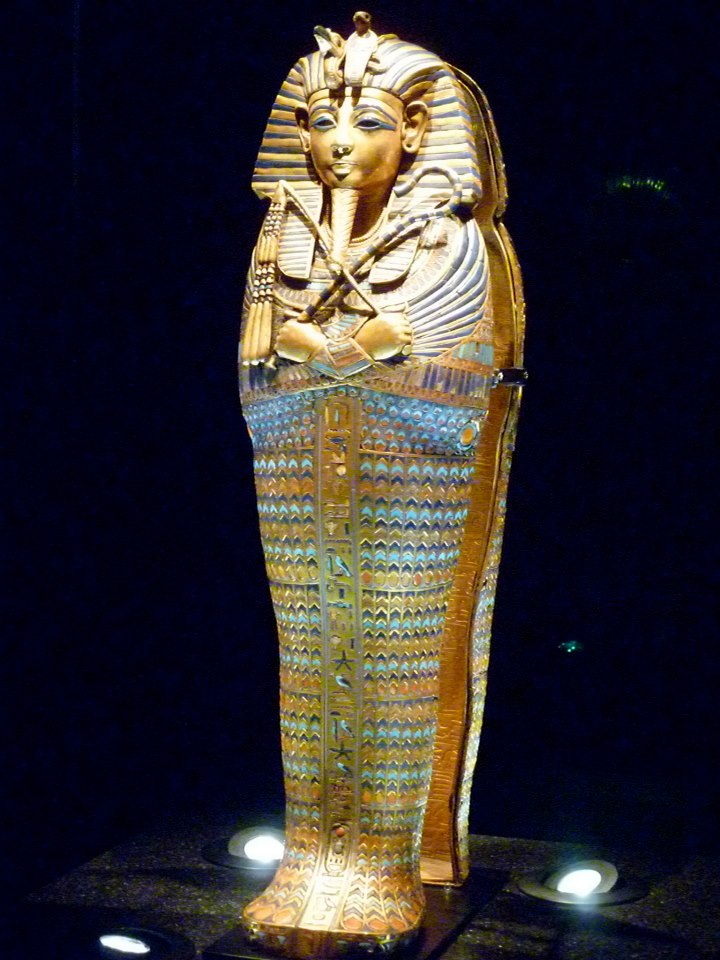
Canopic coffinette, from the tomb of Tutankhamen.

Thanks to having a honking huge amount of press, King Tut's one of the most famous people ever for being dead. He's really famous for two things. Lots of gold, and for having a cursed tomb that killed those who violated it. 

The story is that everyone who was present at the opening of Tut's tomb died shortly after, and usually in bizarre or freakish ways. 

Common additional examples given as proof of the curse are:

  • Carver's pet canary was eaten by the same kind of cobra as was sacred to the Egyptians.
  • The moment Lord Carnarvon  died, all the lights in the city of Cairo went out. 
  • Somewhere in the tomb was the curse: "Death shall come on swift wings to him that toucheth the tomb of the Pharaoh." 

So where the people who opened the tomb cursed?


Tuesday, August 7, 2012

Pontiff Ponderings


This one comes up pretty much any time someone finds out that I spent a lot of time studying the Medieval period when I was getting my degree. The conversation usually goes something along the lines of, "Oh, you studied Medieval church politics. Did they cover Pope Joan?" *smirk* *wink wink* You know, because we only studied *Catholic Church Approved* history at my... secular... state... university. 

For those of you who haven't heard of this one (it seems to be favored in the "I watch Game of Thrones so now I'm a Medievalist crowd" {no offense to the people who like Game of Thrones, but it's not exactly a shining example of Middle Ages accuracy}), Pope Joan is supposed to be a woman who managed to hide her sex and reign as Pope for a period of a little over 2 years. But she got pregnant and delivered a baby in the middle of a parade of some sort and then was stoned to death by the crowd. Or something like that, there are a few variations of the tale. 

The story often goes on to elaborate that the entire world has covered up her existence conspiracy-style because it would be embarrassing to the Catholic Church to admit her existence, so it's a secret known by a select few and the person I'm talking to just happen to be one of the few in the know. 

*facepalm*

Friday, July 27, 2012

Shakespeare's pen


Cobbe Portrait of William Shakespeare

This one I don’t even. It’s come up a couple times and I’m still baffled every time it comes up. Most mythbeliefs I can kind of see the quasi-logic behind, but with this one I really can’t.

So what is this mythtory? That William Shakespeare didn’t write Shakespeare’s plays. Edward de Vere is the usual “true” author given when pressed for an alternate author, but I’ve seen other names tossed out as well, like Christopher Marlowe.

So did Shakespeare write Shakespeare? 

Friday, June 29, 2012

Tasty Lady


Chocolate candies are always the most reliable historical sources.
Incidentally, you have no idea how hard it is to find pictures of this that are safe for work.

Everyone knows about Lady Godiva’s famous ride. Her evil husband’s challenge that if she cared about the people of the city so much, he’d lower the taxes – if she’d ride though the city naked at high noon. Of course, never being one to turn down a dare, she did just so, and the one person who peeked during her au natural ride (Peeping Tom) was struck blind. And then her evil husband was forced to lower taxes, and Lady Godiva went on to found a great chocolate empire with Godiva Chocolates.

Ok, most people don’t actually believe that last part. But I have heard people say it. Frankly, it sounds pretty awesome.

So, what’s to not get right? Evil husband, brave woman, struck blind man, chocolate… Just how much of it is history and how much of it is mythtory?

Tuesday, June 12, 2012

Medieval Witch Hunts


Monty Python. The expert of all things witchy.


Everyone’s heard someone say something along the lines of, “If I’d lived in the Middle Ages, I’d have been burned as a witch.”


Because everyone typically knows two things:


1. The Middle Ages were one big witch hunt, until the Renaissance/Enlightenment arrived and everyone returned to sanity.


2. Witches were burned alive, traditionally at the stake.


Tuesday, June 5, 2012

Henry VIII and his wives

I could write pretty much my whole life on the mythtories of this man and his wives.


Swiped from quickmeme.com

Quick! Pull out a piece of paper and see if you can answer these (without consulting Google).

1. How many wives did Henry VIII have?

2. How many wives did he kill?

3. How many wives did he divorce?

4. How many wives outlived Henry VIII?

Answers after the jump...